| | Hello ESTers!
Welcome back to InsideMENA, your bi-monthly snapshot of the key political, social, and cultural developments shaping the Middle East and North Africa, with an eye on Europe and the wider world.
As always, we’re bringing you concise analysis and fresh perspectives from across the region.
Ready to dive in? Let’s go InsideMENA!
P.S. Reading this on our website? Subscribe to get InsideMENA straight to your inbox every fortnight.
Edited by Clarice Agostini and Jesse Woche Note that the information, views and opinions set out in the newsletter are those of the authors and do not necessarily reflect the opinion or position of the editors, of the European Student ThinkTank, and of their affiliated entities or institutions.
|
|
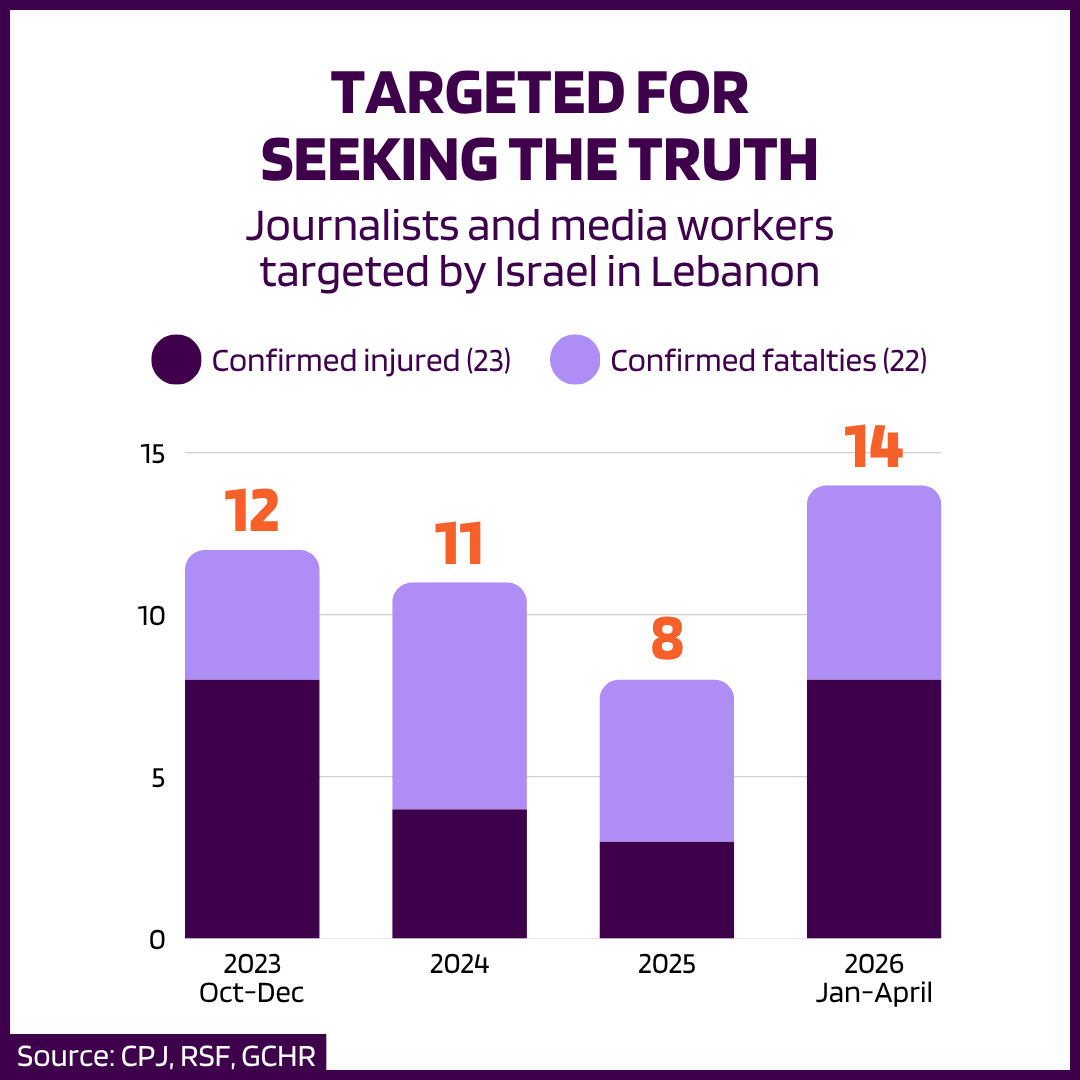
Targeted for Seeking the Truth: Israel’s Continued Attack on Journalists in Lebanon By Hannah
|
|
War crimes. Israel has been accused of committing war crimes after air strikes killed Lebanese journalist Amal Khalil and injured photographer Zeinab Faraj. Israel is accused of deliberately targeting the home in which they were sheltering, after a first air strike had hit the vehicle in front of them. They have also been accused of intentionally targeting a marked ambulance as it tried to reach the journalists.
Condemnation. Lebanese Prime Minister Nawaf Salam has spoken on the murder, saying that "targeting journalists, obstructing access to them by relief teams, and even targeting their locations again after these teams arrive constitutes described war crimes."
An incredible loss. Amal Khalil had continued to report from South of Lebanon, a region shattered by Israeli strikes, to help inform the world of the devastation wreaked upon the area, despite the incredible risks it involved. She had previously noted that she had been threatened with an Israeli death threat and was warned to leave southern Lebanon.
A pattern of crimes. Although the IDF denies these accusations, this follows patterns across Lebanon and Gaza of deliberately targeting journalists and health care workers. Earlier this month, two journalists, Ghada Dayekh and Suzan Khalil, were killed in Israeli strikes. Furthermore, at least 100 Lebanese medical workers have been killed, and triple-tap strikes were used against paramedics.
|
|
UAE-Saudi Rift Reopens By A Voice from Iran |
|
GCC criticism. The UAE has openly criticised Persian Gulf allies over their response to the Israel-US war on Iran. Presidential Adviser Anwar Gargash said the (Persian) Gulf Cooperation Council’s position was “the weakest historically,” given the scale of the Iranian threat. He added: “I expected such a weak stance from the Arab League… but I don’t expect it from the GCC, and I am surprised by it.”
OPEC exit. Days later, the UAE announced it would leave OPEC and OPEC+, saying it wanted to pump more oil on its own terms. Energy Minister Suhail Al Mazrouei said “the world needs more energy” and that the UAE wanted to be “unconstrained by any groups.” The UAE currently produces about 3.2 to 3.6 million barrels of oil per day under OPEC quotas. However, it has the capacity to produce nearly 4.8 million barrels per day.
Saudi rift. The move is a blow to Saudi Arabia, OPEC’s de facto leader, and reopens a wider rivalry over oil policy and regional influence. The Iran war has “supercharged these tensions,” making Persian Gulf unity more likely to erode than strengthen. This tension also affects the UAE’s relations with other Saudi partners, such as Pakistan. The UAE asked Pakistan to repay a $3.5 billion loan, showing its frustration with Islamabad’s role in US-Iran mediation, its position on the war, and its closer ties with Riyadh. |
|
The Tunisian League for Human Rights (LTDH) Activities´ Suspended for a Month By Laura |
|
Suspension of LTDH activities. According to OMCT World Organisation Against Torture,, last Friday, 24 April, the activities of the Tunisian League for Human Rights (LTDH) were suspended for a month. The organisation, one of the oldest human rights groups in Africa and the Arab world, plays a pivotal role in Tunisia’s democratic landscape, advocating for civil liberties, monitoring human rights abuses, and supporting the rule of law.
Concerns over civic space. This measure arrives amid growing concerns for the civic space in Tunisia. According to many sources, the North African country is experiencing an unprecedented crackdown against its civil society, with increasing suspension of CSOs and the detention of activists. On their side, the Tunisian authorities have defended the 30-day judicial measure as necessary to regulate LTDH´s fiscal and administrative situation.
Nobel Peace Prize Laureate. In 2015, the LTDH received, alongside other Tunisian CSOs, the Nobel Peace Prize “for their decisive contribution to the building of a pluralistic democracy in Tunisia in the wake of the Jasmine Revolution of 2011.”
Brussels is concerned. The EU has expressed its deep concern over the suspension of the organisation. Brussels affirmed its intention to further monitor the evolution of the situation, calling on the Tunisian authorities to allow independent voices to contribute to the civic space in the country. |
|
Dakar Forum Highlights a Sahel in Strategic Recomposition By Jordi |
|
|
| |
| |
|